
Babdarna Case Study
From Zero to a Hospitality Operating System
Overview, Challenge & Strategy
Overview
Babdarna is a hospitality-tech operating system designed to restructure coastal property management and short-term rentals in Egypt. Rather than operating as a traditional rental brand, Babdarna functions as an integrated infrastructure layer across hospitality, property management, and technology—transforming fragmented coastal assets into a unified, system-driven ecosystem.
The platform governs the full operational lifecycle of properties and guest experiences, including listings, pricing logic, booking flows, operational readiness, maintenance coordination, guest support, and performance tracking. Babdarna was created to address a structural market gap characterized by fragmentation, lack of standardization, and low trust. The outcome is not a service, but a scalable operating system.
Challenge
The project began with no existing foundation—no identity, no digital presence, and no operational infrastructure; only a business concept on paper. The complexity was amplified by a fragmented coastal rental market characterized by inconsistent operations, lack of structure, and limited trust between stakeholders.
This required a dual-layer build: developing both the brand system and the operational infrastructure simultaneously. The objective was not to launch a brand, but to engineer a functioning system capable of operating in real market conditions from day one, especially with the upcoming season creating a critical time constraint for execution and readiness.
Strategy
Babdarna was approached as a system design initiative rather than a traditional brand launch. The strategic intent was to build a complete hospitality operating framework where identity, digital infrastructure, and market activation operate as interconnected layers of a single ecosystem.
Babdarna was positioned as an operational infrastructure layer connecting property owners, internal operations, and guest experience under a unified system logic. This required the parallel development of three core layers: brand identity architecture, digital ecosystem infrastructure, and market activation systems.
Logo Design
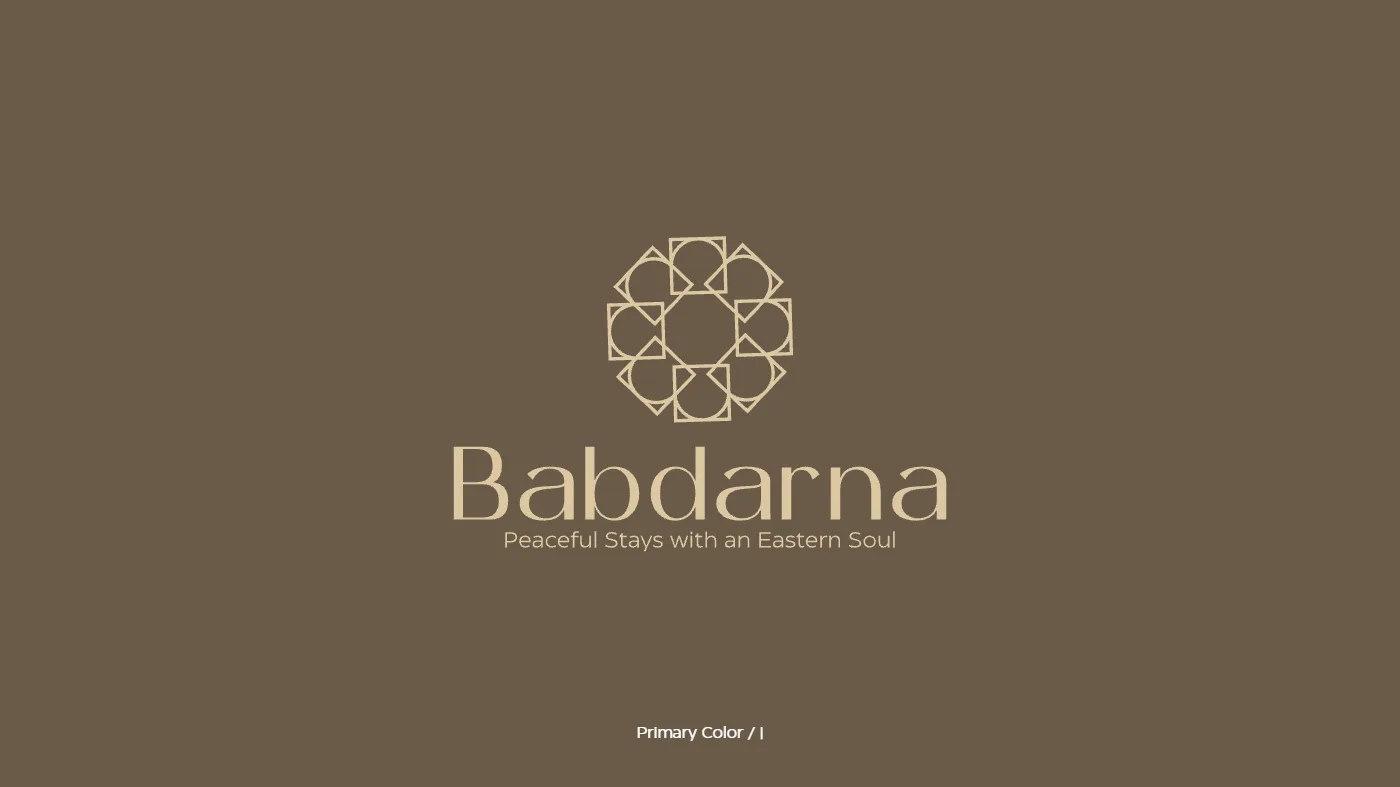
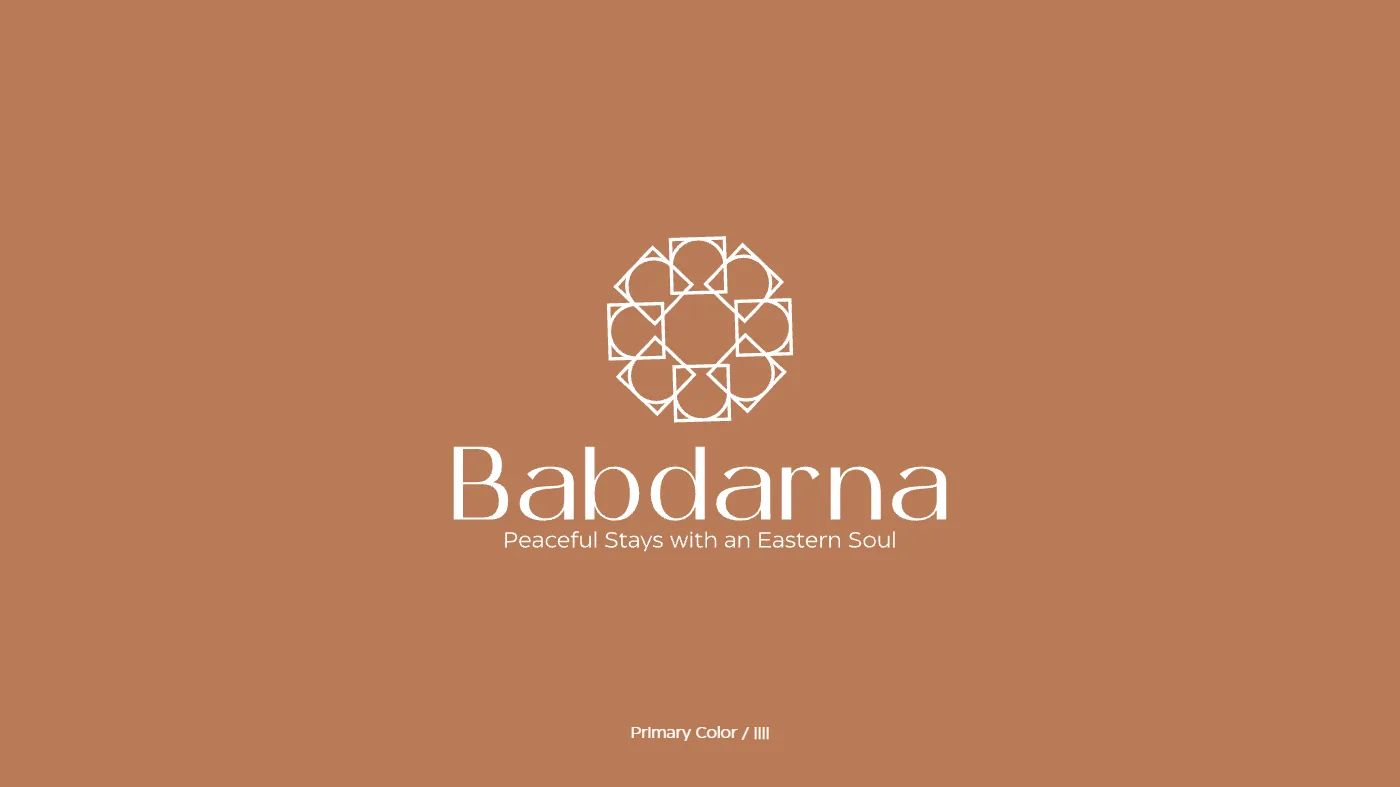
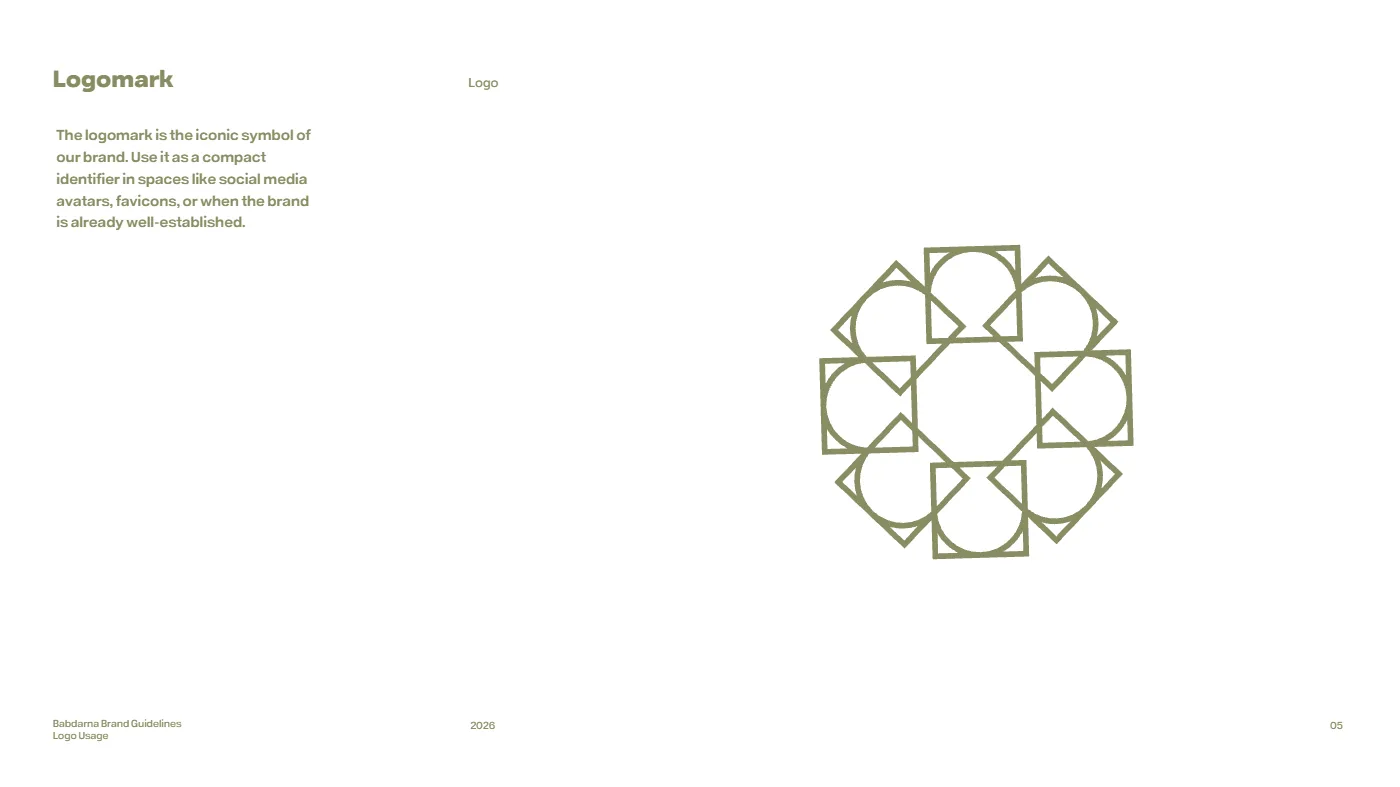
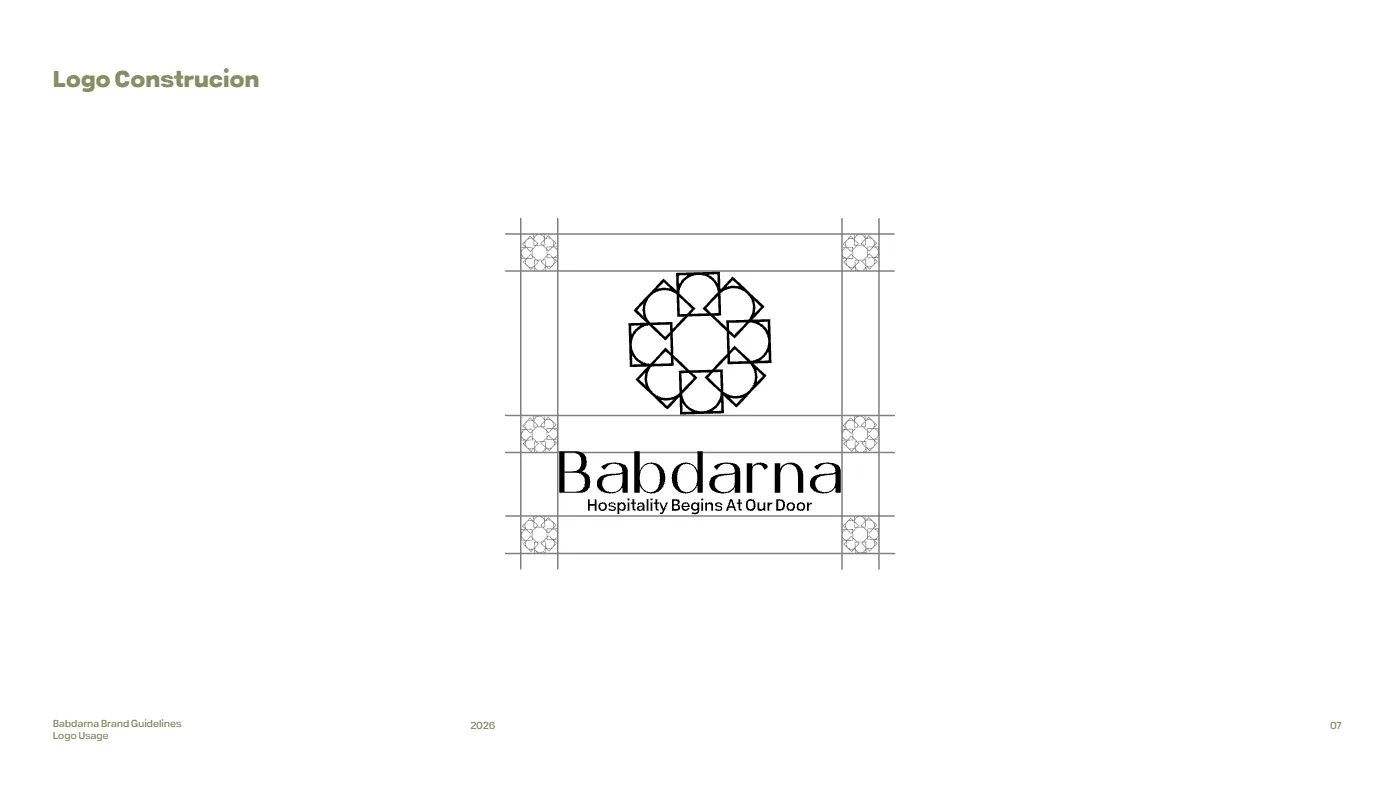
The logo was developed as a symbolic interpretation of the name “Babdarna,” meaning “The Gate of Our Home.” The concept is rooted in Egyptian architectural heritage from the 1950s, specifically the geometric structure of wooden mashrabiyas and traditional window forms.
These elements were merged with a simplified door-like structure to create a unified visual metaphor of a “gate.” Multiple explorations were conducted to ensure the logo remains meaningful, minimal, and scalable across both digital and operational environments.
- The mashrabiya introduces cultural depth, rhythm, and heritage
- The door structure reflects the literal meaning of the brand name
- Together they express identity, belonging, and access
Visual Identity System
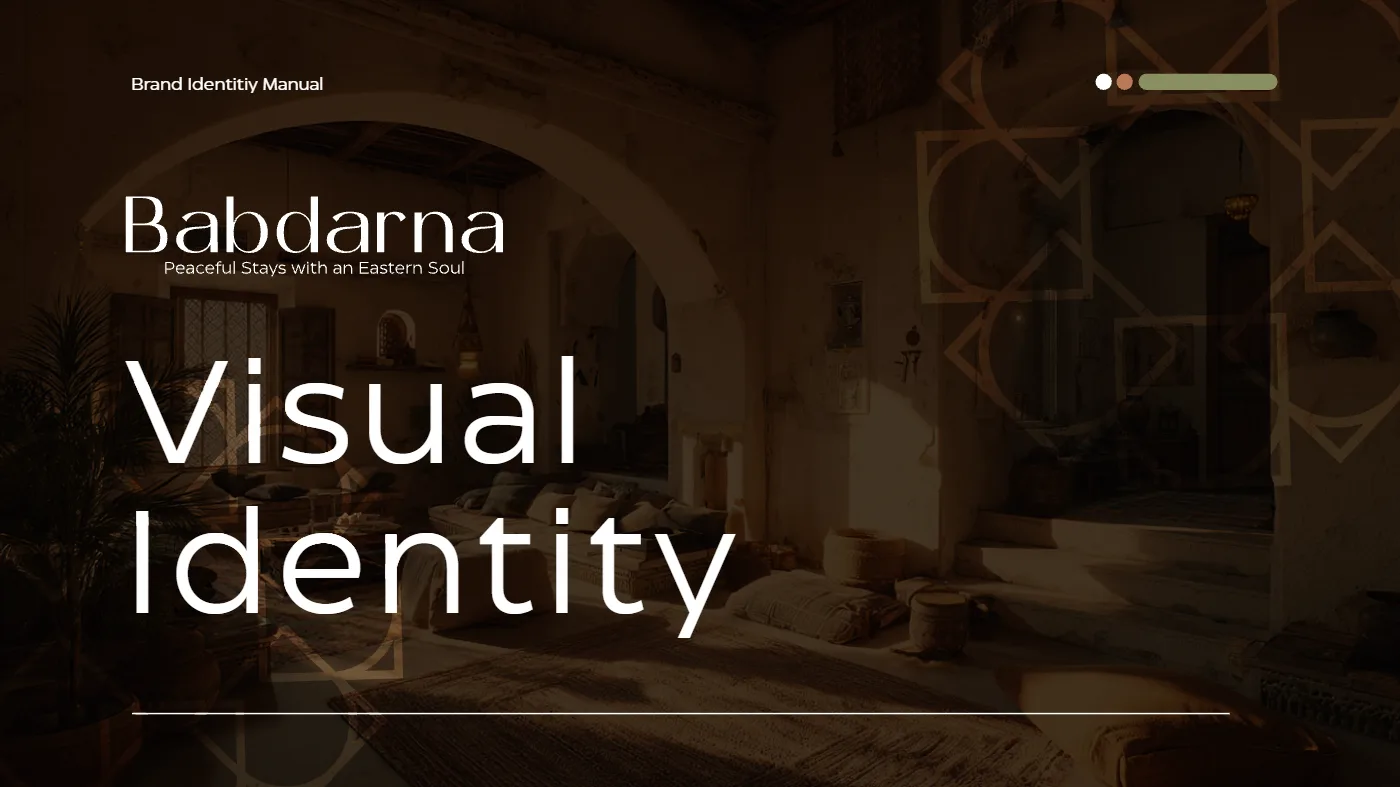
A complete visual system was developed to extend the logo into a scalable brand language. The identity was designed to function as a system, not a static visual—bringing architectural rhythm, coastal warmth, and operational clarity into every touchpoint.
- Color system defining trust, warmth, and coastal identity
- Typography system for structured communication and clarity
- Graphic elements inspired by architectural rhythm and structure
- Layout principles designed for system consistency across platforms
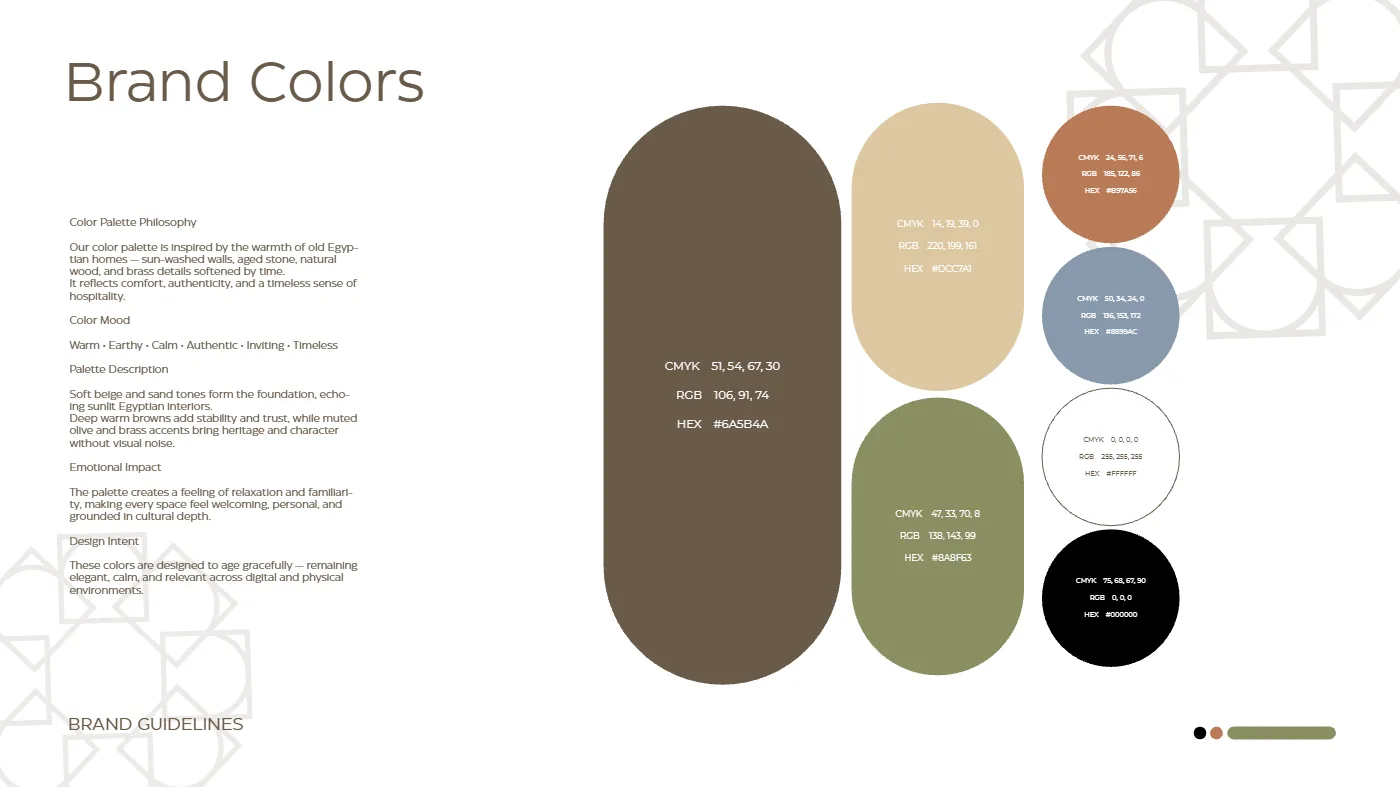
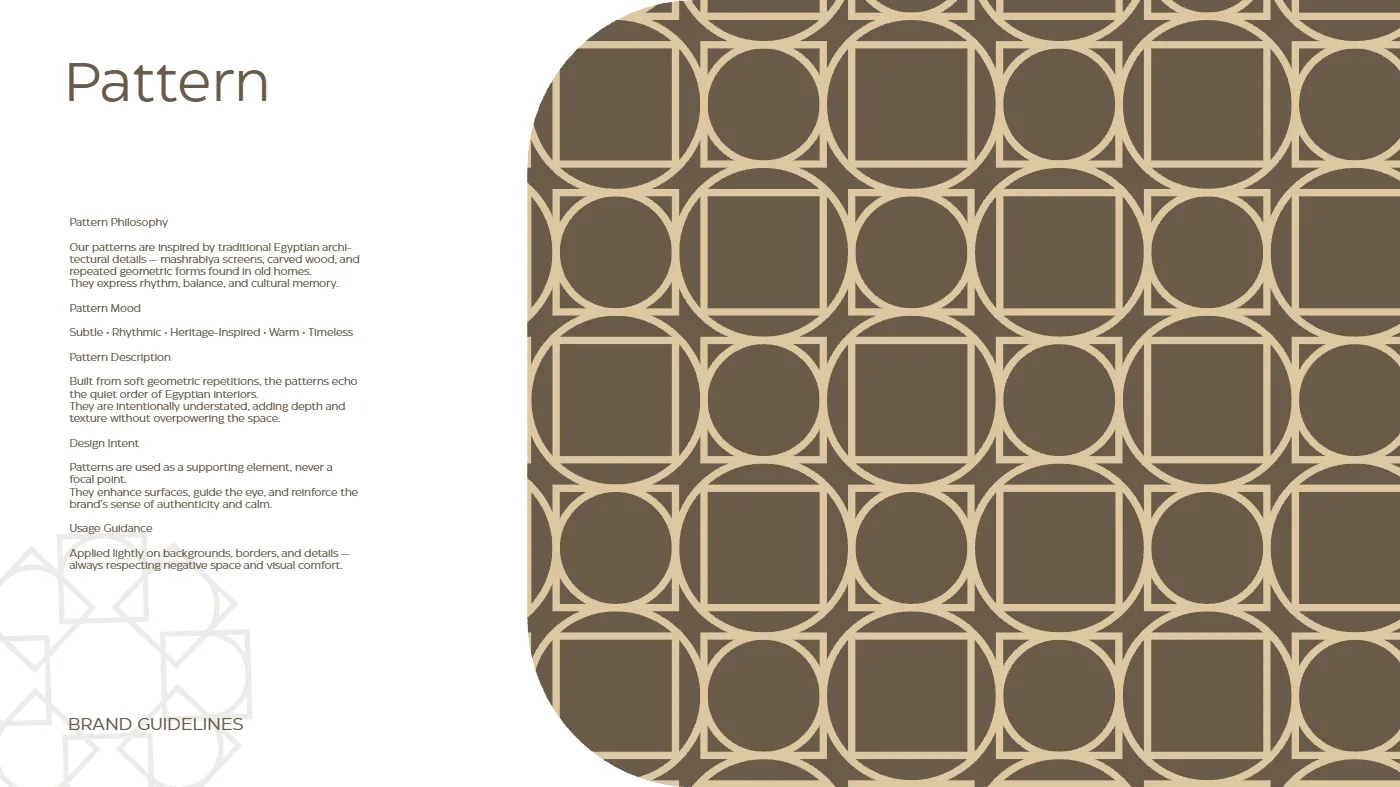
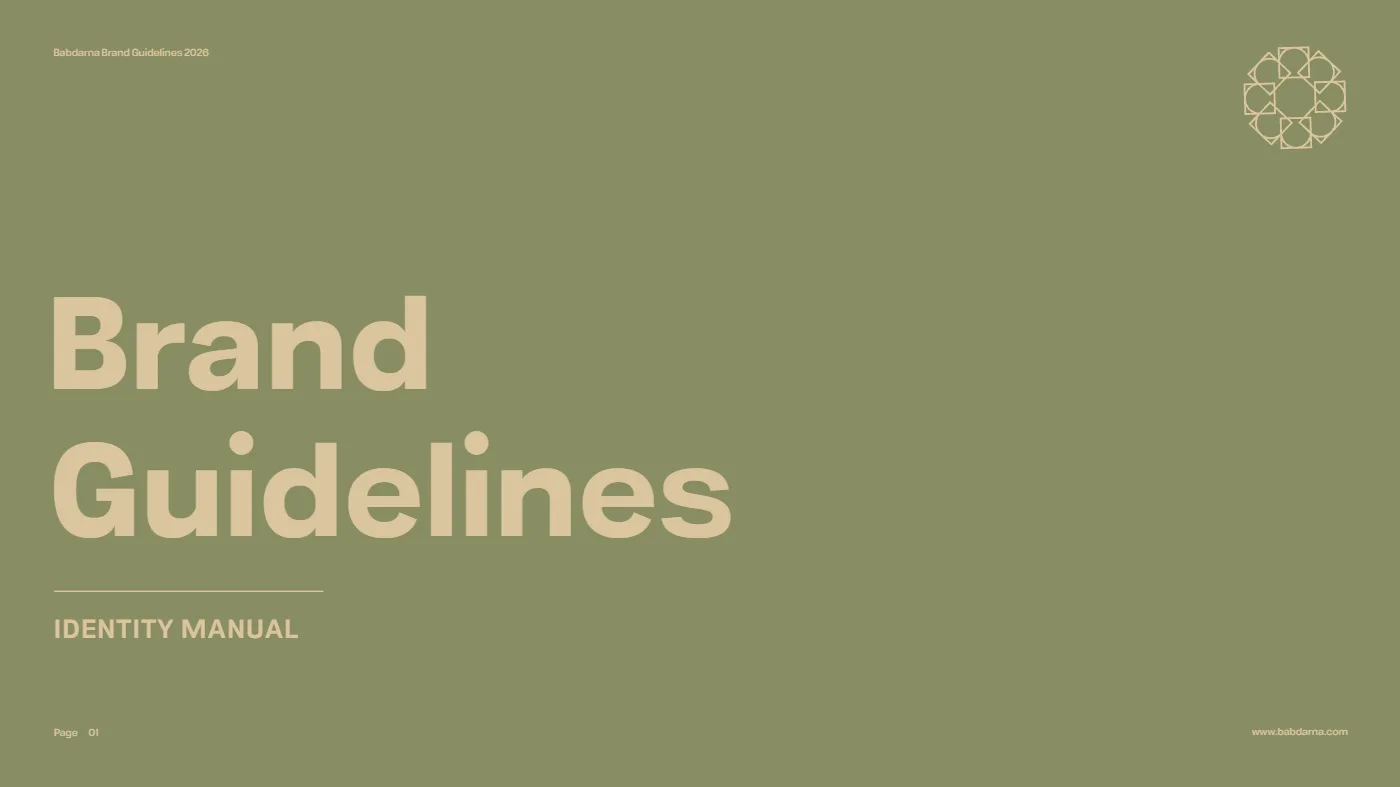
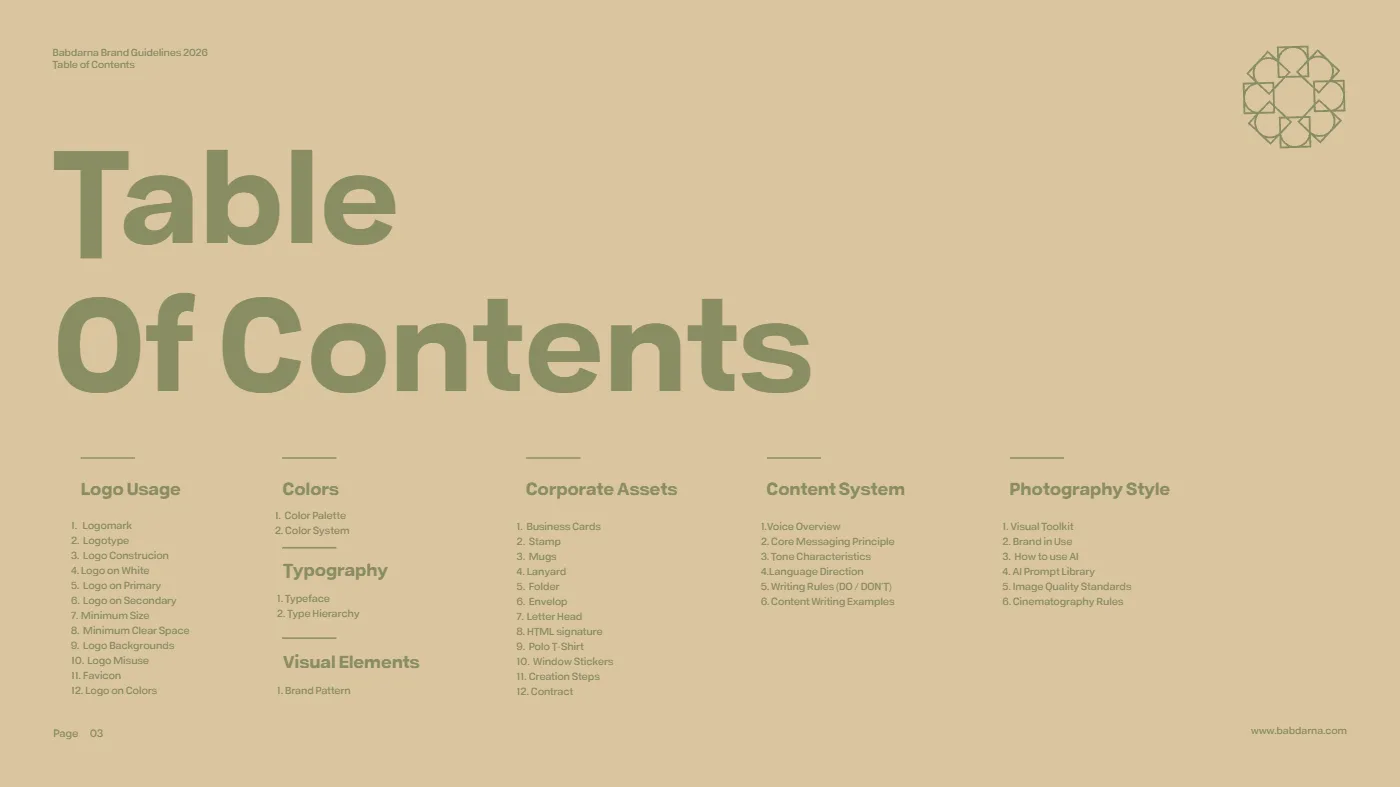
Brand Guidelines
A structured system of guidelines was developed to govern how the brand behaves visually and verbally across all applications, ensuring consistency across digital, print, and operational environments. The system defines how Babdarna is expressed across all touchpoints while preserving identity integrity at scale.
Brand Applications (Print System)
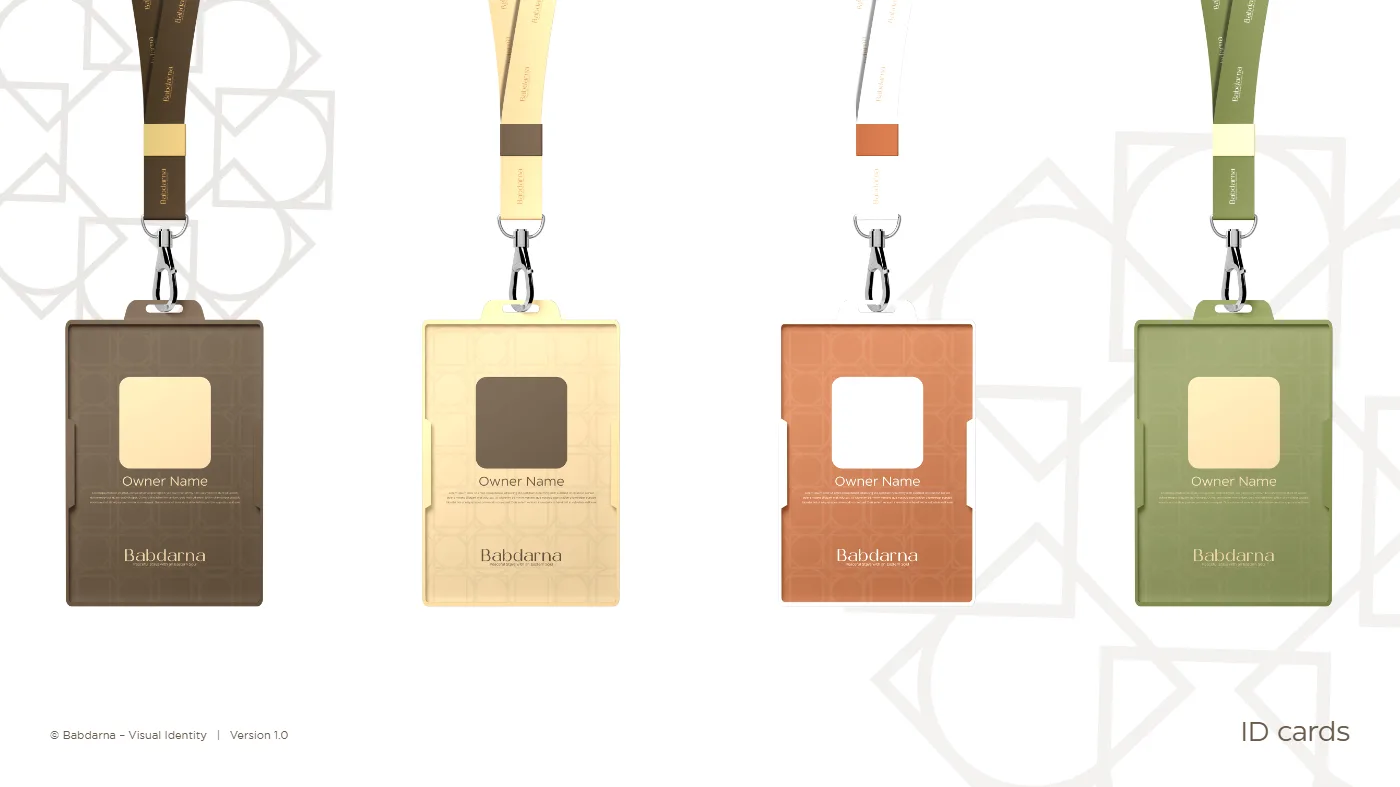
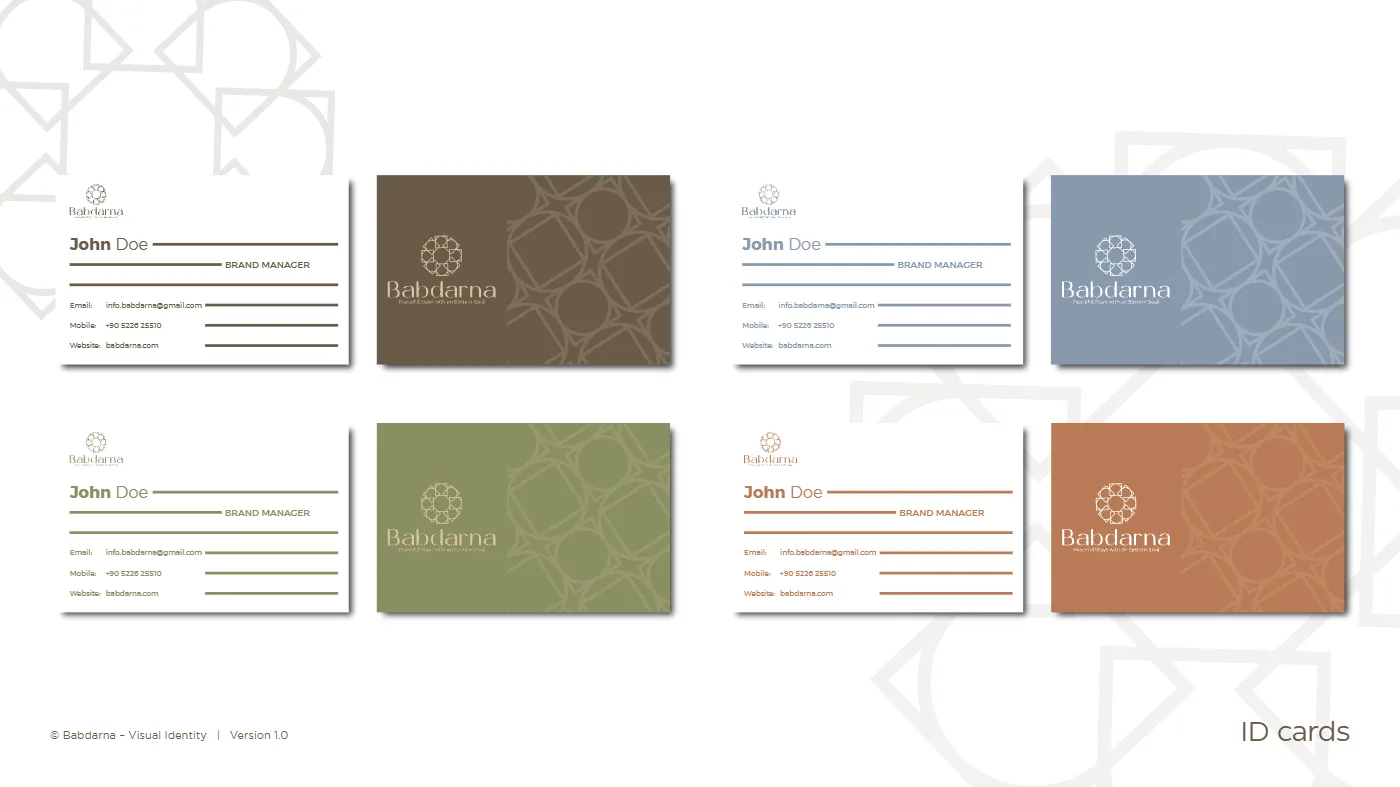
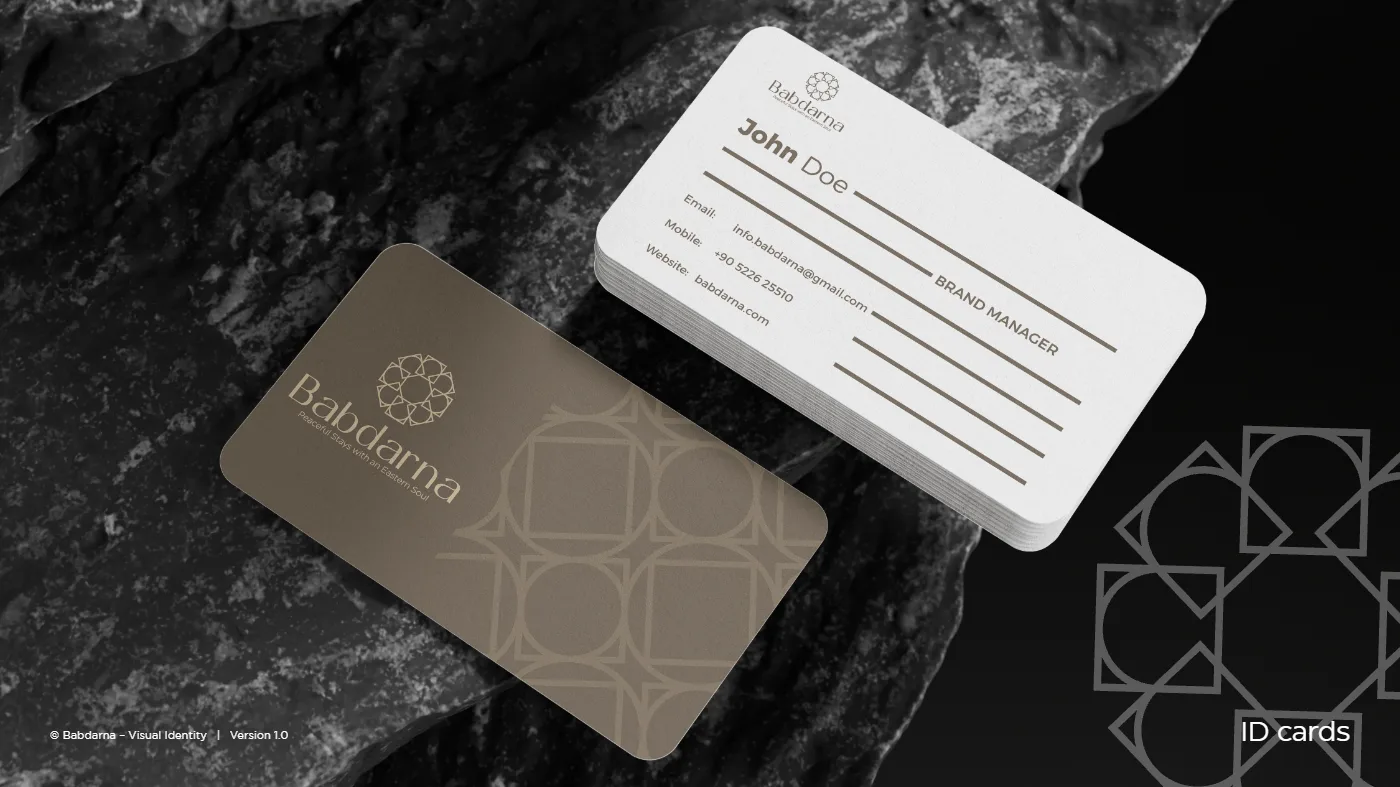
The identity was extended into a fully executed physical system, designed and produced in-house to ensure real-world consistency across all touchpoints.
- Business cards
- Letterheads
- ID cards
- Corporate folders
- A4 & American envelopes
Website System (UX, UI & Content Architecture)
The website was designed as a system interface rather than a traditional corporate website, functioning as the primary digital entry point to the ecosystem. It mirrors the application logic to ensure continuity across platforms and create a unified digital experience.
UX Architecture
The user experience was designed around behavioral continuity between web and application.
- Unified user flows across platforms
- Alignment of operational logic between web and app
- Reduced cognitive friction in navigation
- Structured information hierarchy supporting decision-making
- Seamless transitions between information and action
UI System
The interface extends the application’s design language into a scalable web environment.
- Unified cross-platform design language
- Consistent visual hierarchy and system logic
- Shared typography and color system
- Minimal, structured, system-driven interface design
- Strong coherence across all digital touchpoints
Content Architecture
Content was engineered as a translation layer between operational complexity and market understanding.
- Translating system operations into clear narratives
- Aligning communication across owners and end-users
- Building trust through structured transparency
- Supporting conversion through guided content flows
- Simplifying complexity without losing operational depth

Explore Babdarna Web Ecosystem
Engineered for seamless continuity between property owners, internal operations, and coastal guests.
Visit Live Website (babdarna.com)Company Profile
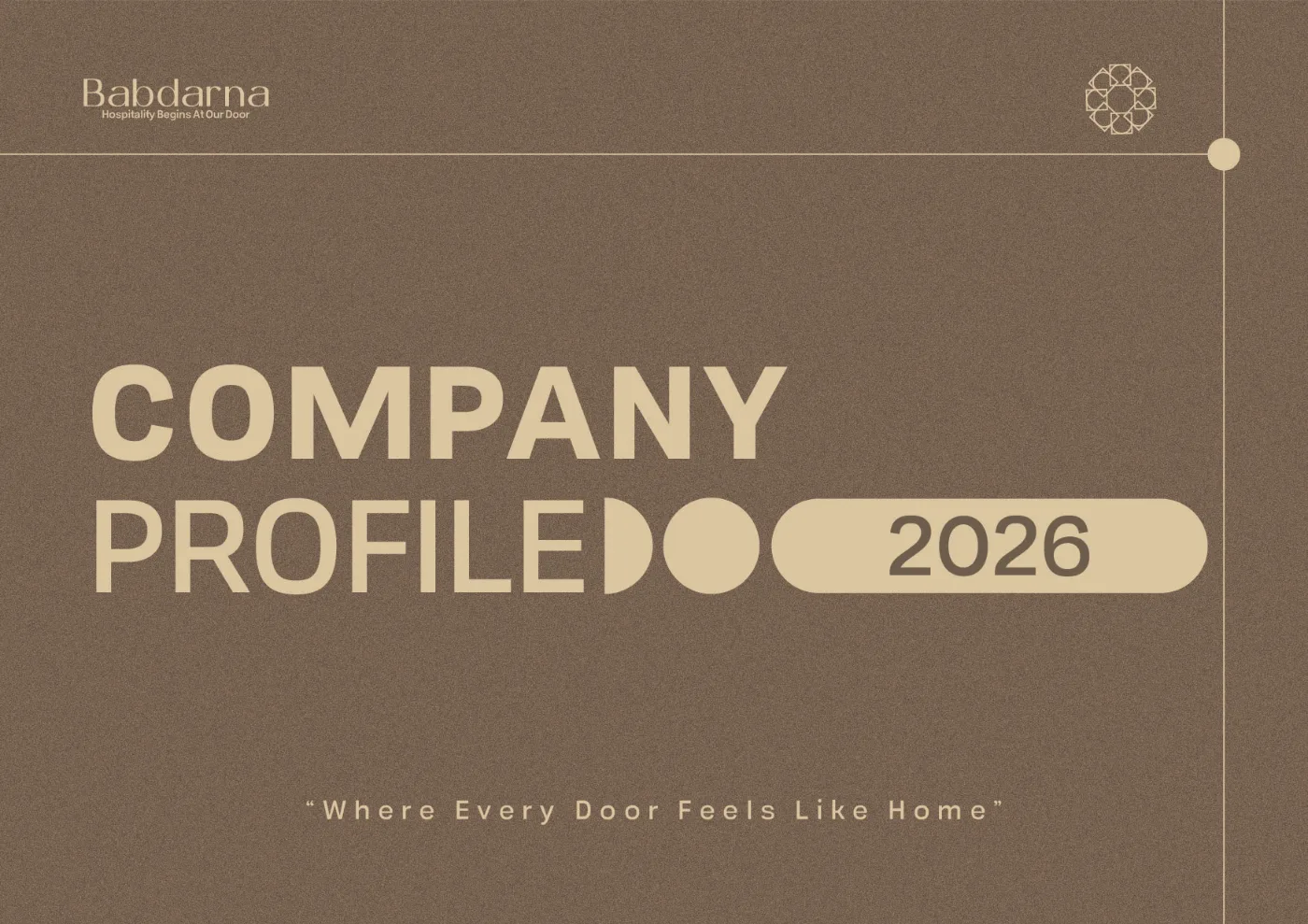
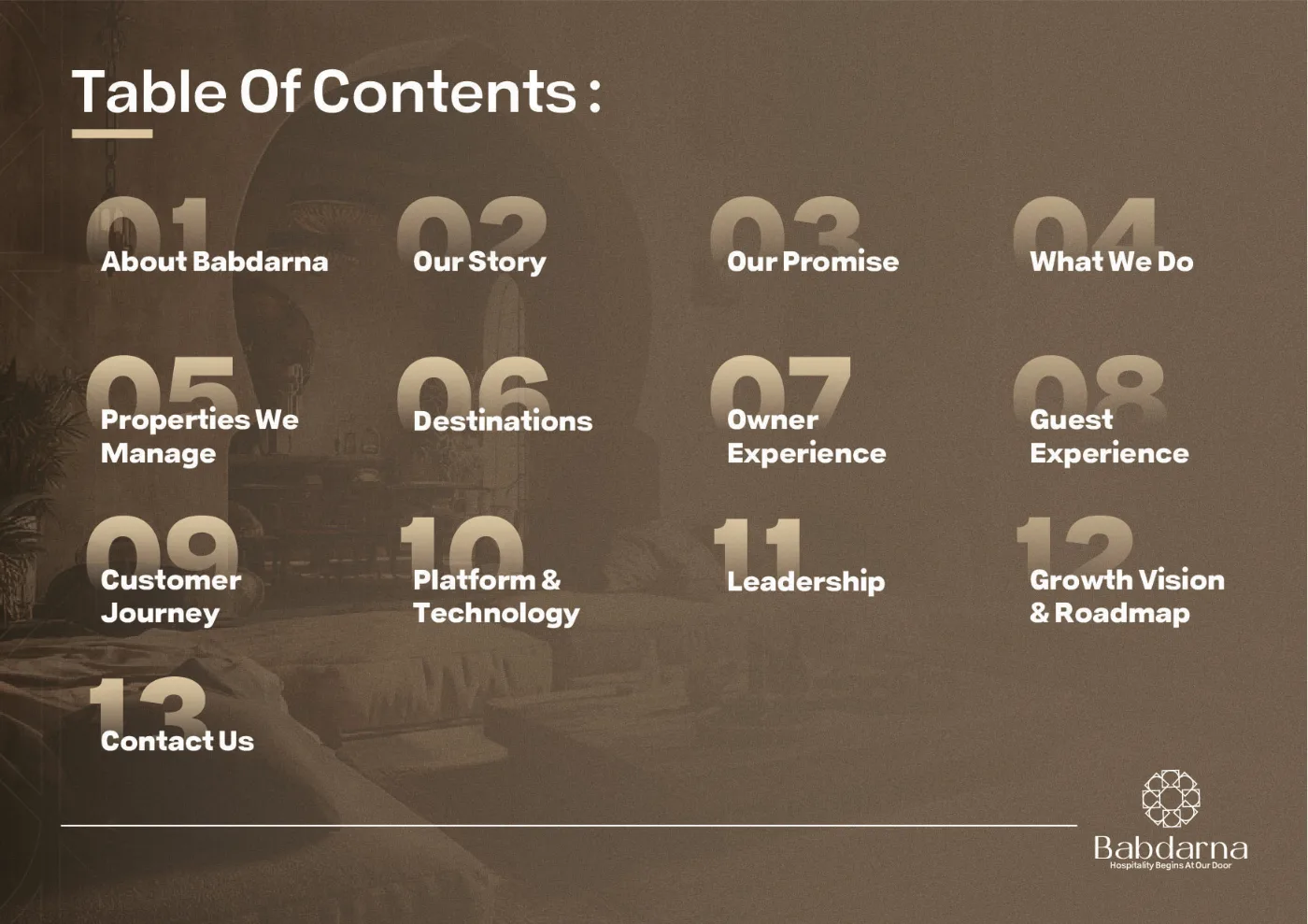
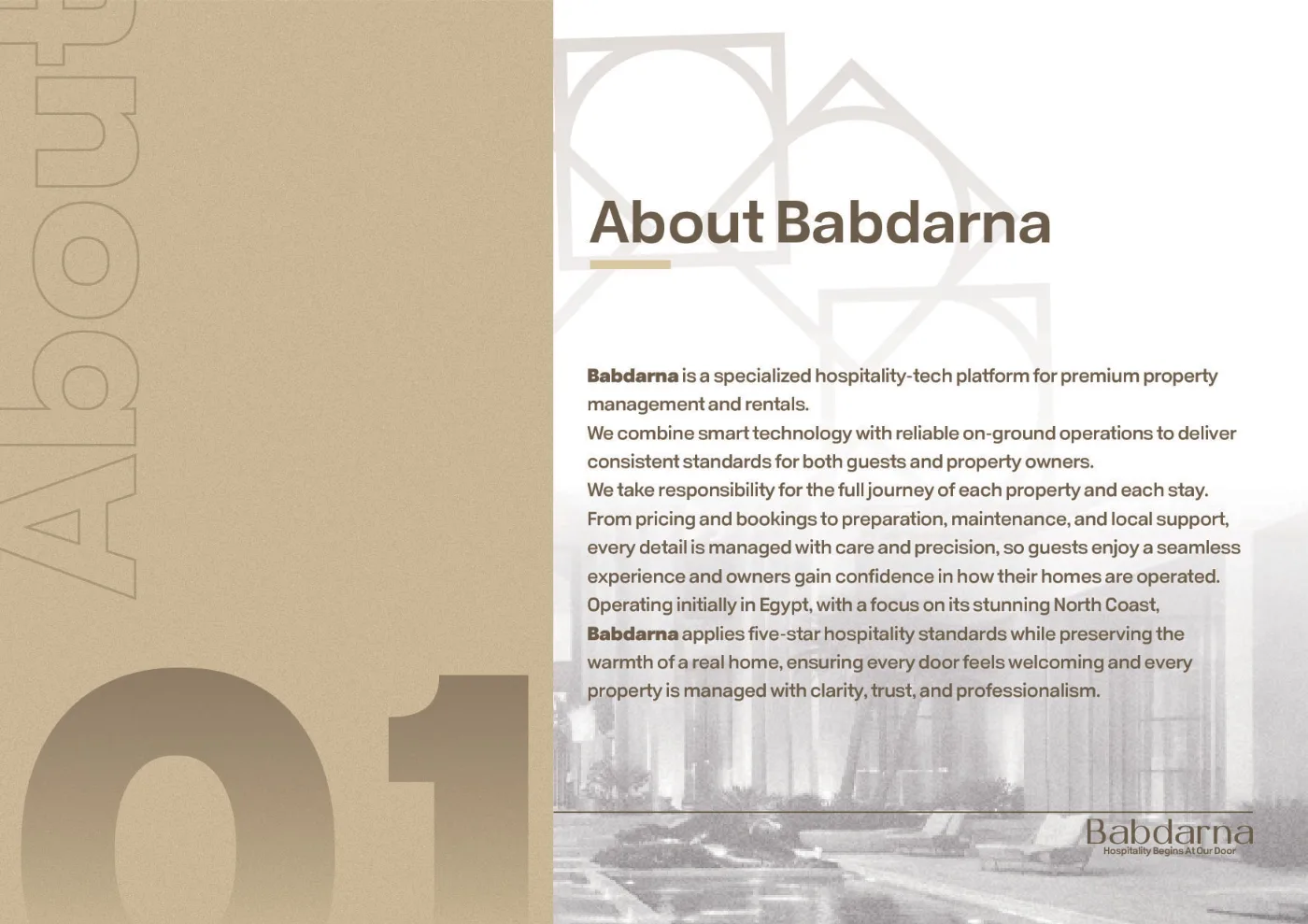
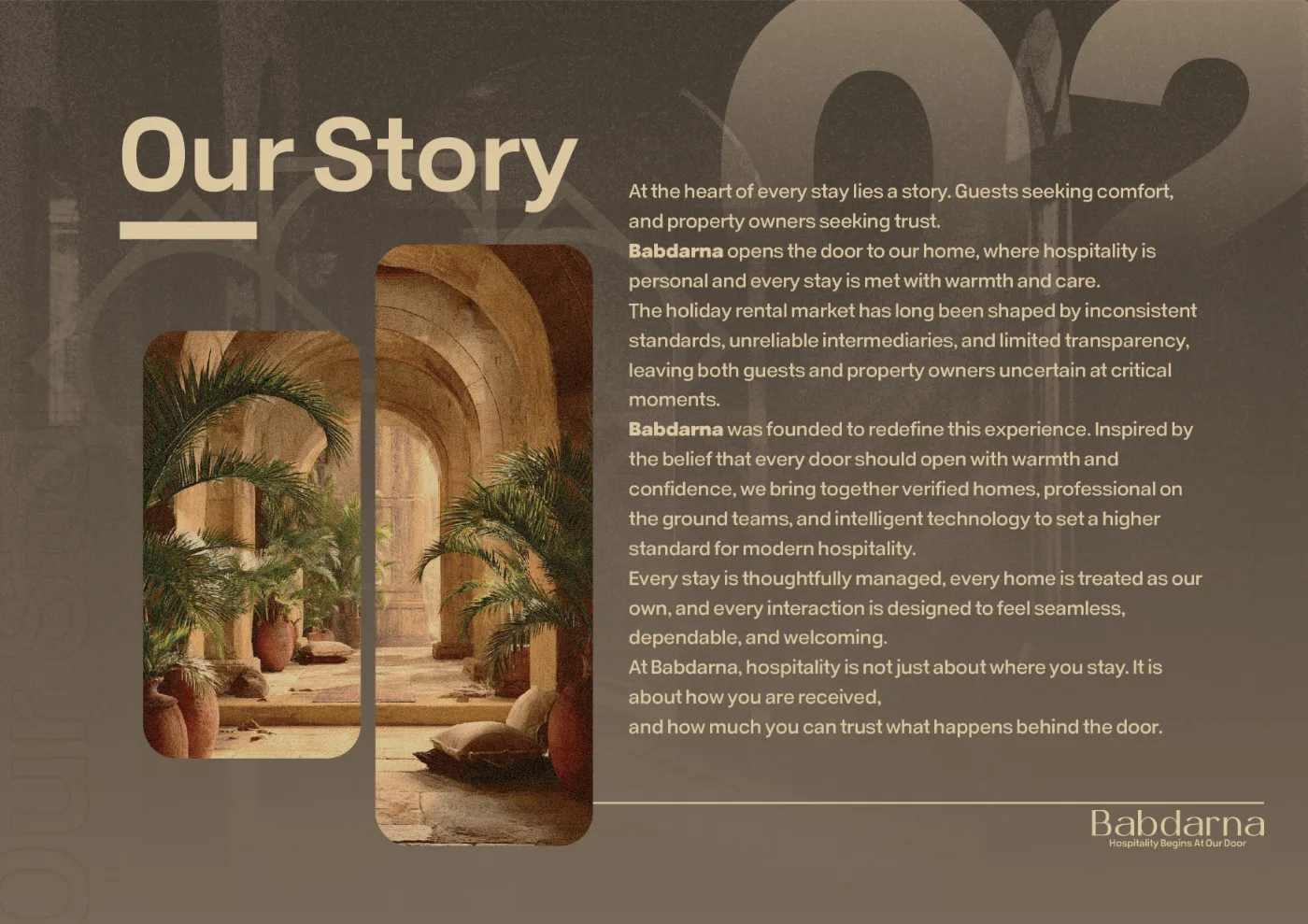
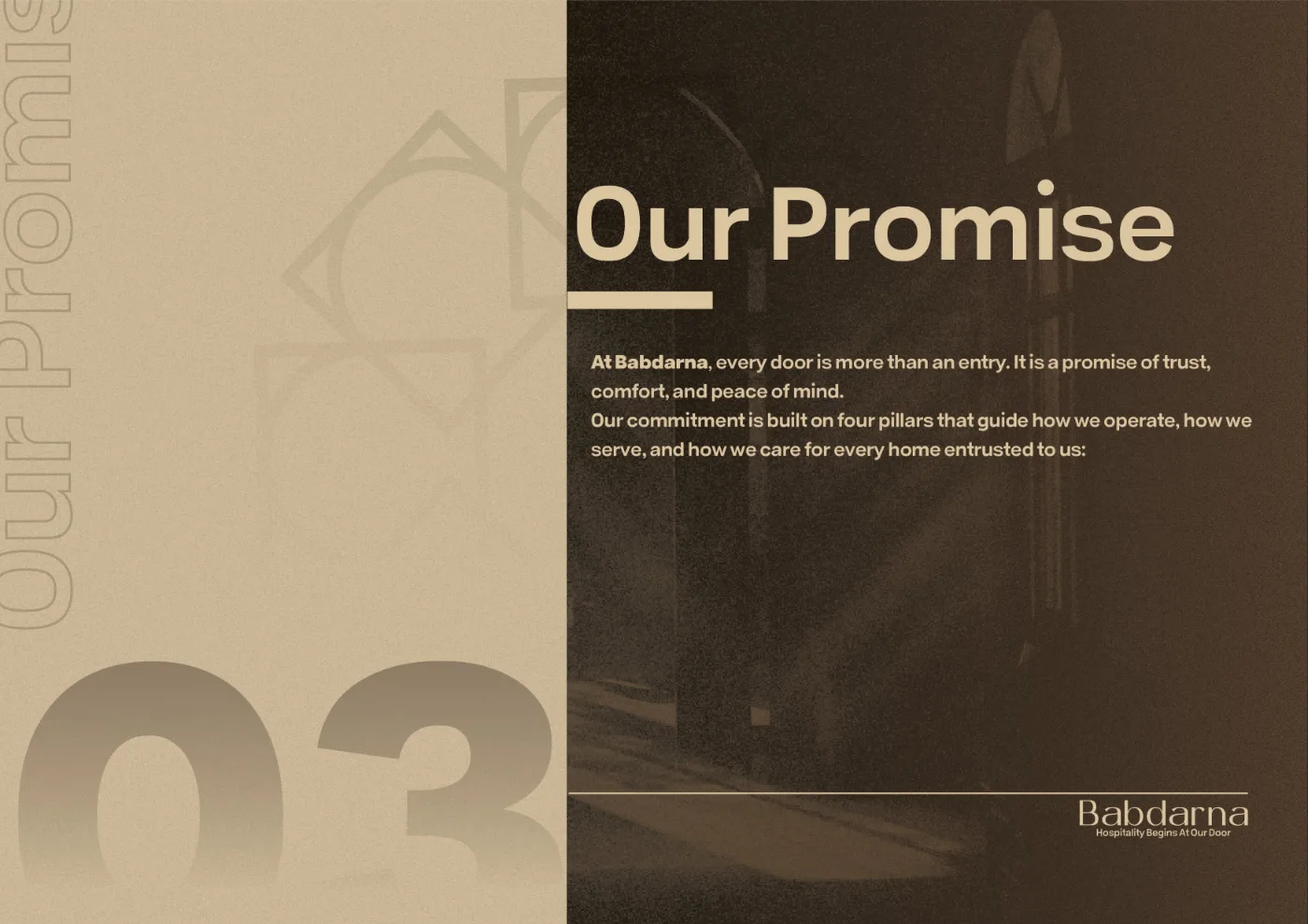
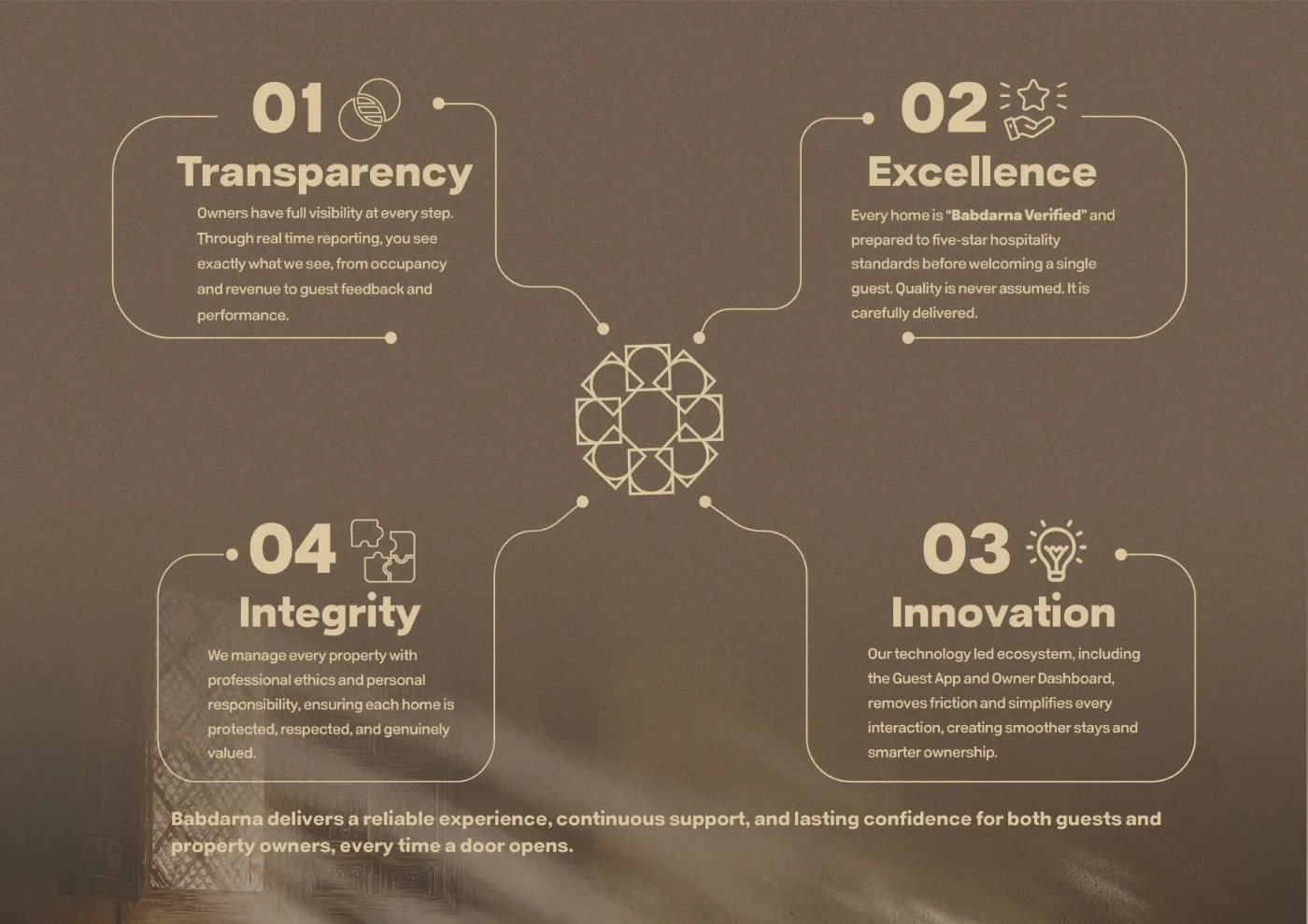
A structured company profile was developed as a strategic communication asset. It positions Babdarna as a hospitality operating system rather than a service provider, clearly articulating its structure, ecosystem, and operational logic.
Social Media & Media Buying
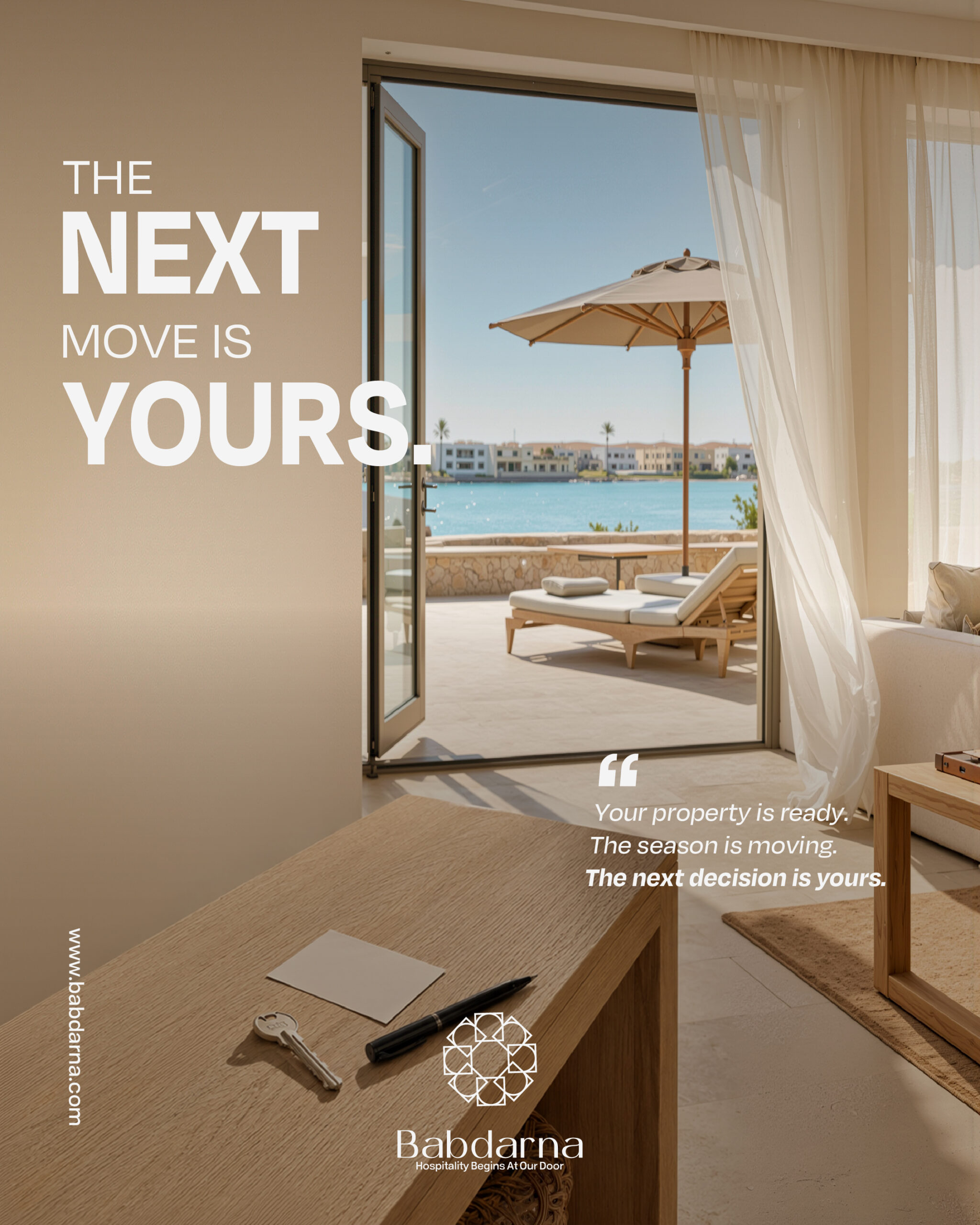
Social media platforms were built from scratch across Facebook, Instagram, and LinkedIn, establishing the brand’s first digital presence in the market. The communication system was designed as a narrative architecture rather than content production.
- Building brand awareness from zero
- Defining the hospitality operating system in simplified form
- Establishing authority in a fragmented, low-trust market
- Transforming operational complexity into an educational narrative
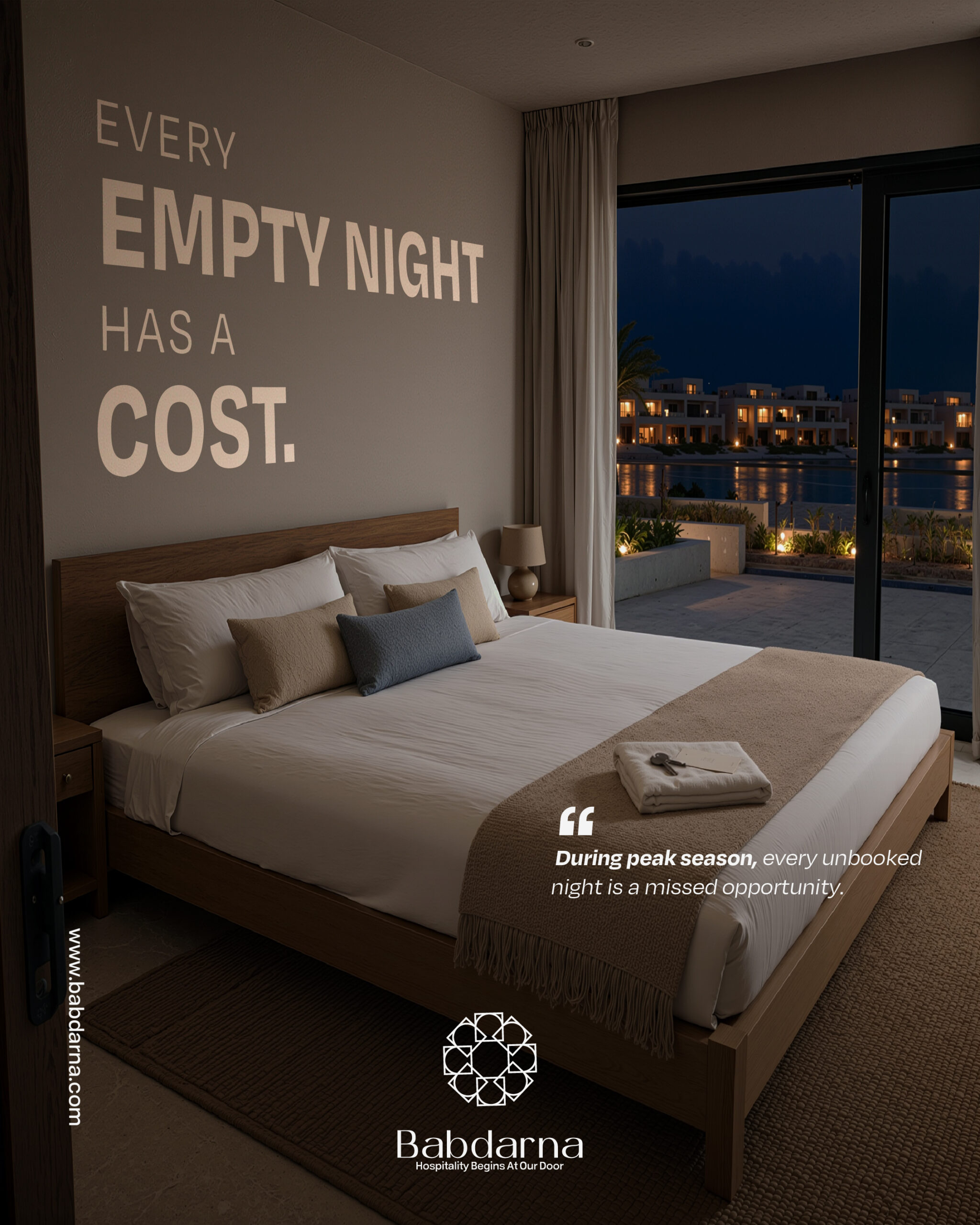
In parallel, performance-driven media buying was activated as a structured market entry mechanism. Rather than traditional advertising, the focus was system activation through demand generation.
- Establishing initial market awareness
- Generating qualified property owner leads as the primary acquisition segment
- Supporting supply-side ecosystem growth
- Enabling continuous optimization through data-driven insights

Outcome & Conclusion
Outcome
Babdarna evolved from a conceptual idea into a fully operational hospitality system within less than six weeks. Through the integration of brand identity architecture, digital infrastructure, content systems, and performance-driven activation, the project was transformed into a scalable ecosystem engineered to operate effectively within a fragmented and low-trust market landscape.
Conclusion
This project represents a full system build, not a brand launch. Babdarna is not a rental service—it is a hospitality operating system. A structured infrastructure where identity, operations, and technology converge into a single scalable ecosystem designed for coastal living.